
- Agentic AI
- Automation
- Claude
- ChatGPT
- Gemini
- Zoho
Which AI should a Swiss company choose to automate its processes?
Claude, ChatGPT, Gemini or Zia? Djtal runs its own finance agent and shows why, for a Swiss company, the task, data and sovereignty matter more than the model.
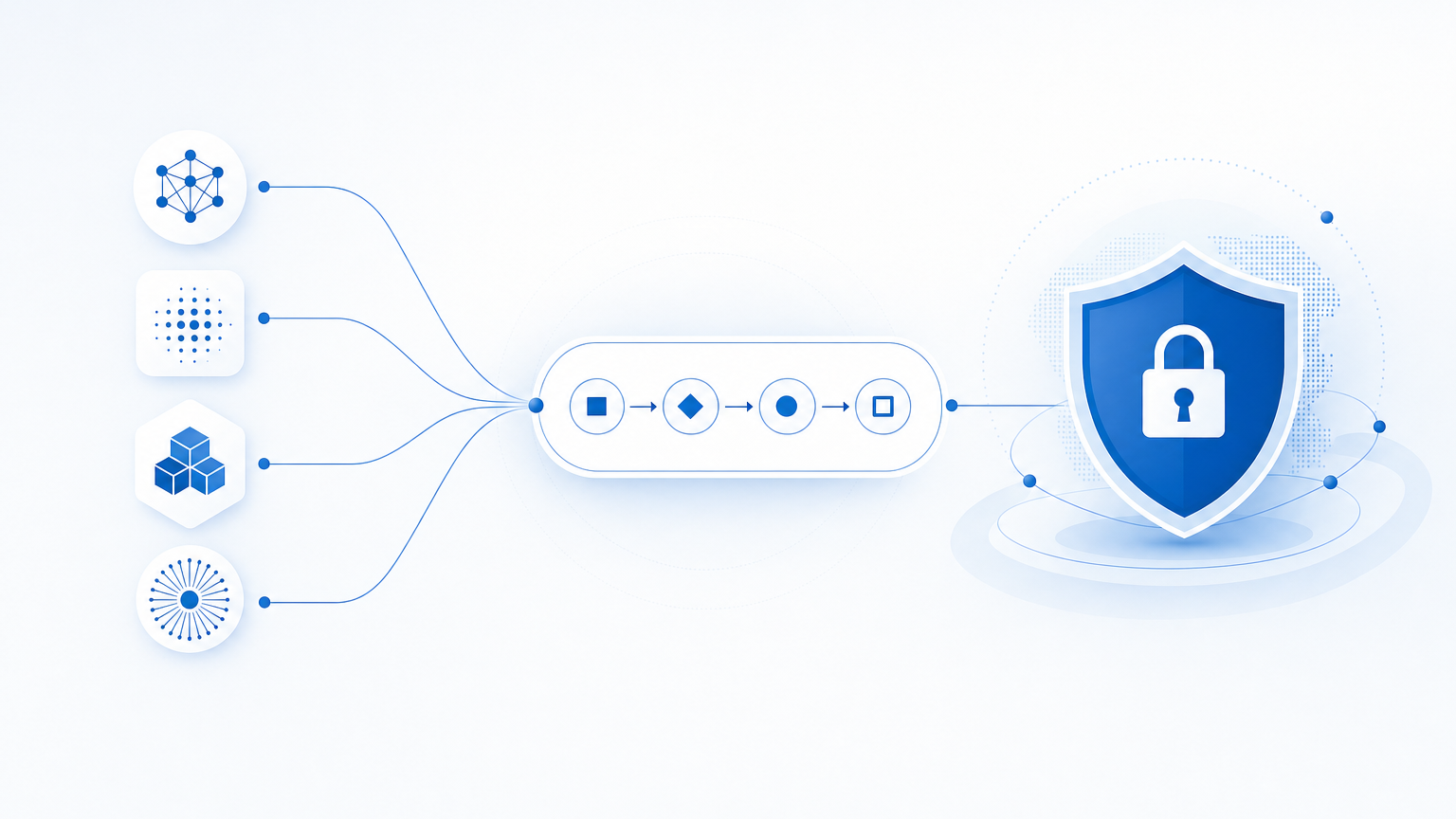
When we set up our finance agent at Djtal, the one that imports the bank’s camt.053 files and reconciles our payments, the choice of AI model came last. It came after the process, the data and the approval rules. That order runs against the usual model comparisons, and it is the whole answer to the question of which AI to use for automation: choose the process first, then the model.
What each model does best
Claude (Anthropic) is strongest at reasoning, long documents and agentic work. ChatGPT (OpenAI) covers the widest range of uses, and your teams already know it. Gemini (Google) fits into Google Workspace, where many teams spend their working day. Your business software may also include its own AI: Zia, in Zoho, scores your leads and transcribes your calls with no extra connector.
Starting from the task (writing, analysing, reasoning through complex cases, acting inside your business software) points to the right model far more reliably than a comparison made in a vacuum.
Where your data goes: the criterion that rules models out
For a Swiss company, one question comes before performance. Where is your data processed and stored? Some high-profile providers host it outside Europe: DeepSeek, for example, processes and stores the data of its services in China (DeepSeek’s privacy policy). That is a serious issue under the Swiss Federal Act on Data Protection (FADP) and the GDPR as soon as a process touches customer, financial or HR data. Data sovereignty rules out candidates before any benchmark does. Better to know that before you sign.
The model matters less than the system around it
All models are improving fast and the gap between them is narrowing, so the model itself is gradually becoming a commodity. Our finance agent stops dead when an invoice arrives from a supplier that no human has yet approved. That rule comes from the system built around the model: a written scope, clean data, human sign-off on what matters, and a log of every action. Change the model tomorrow and the setup holds. (How we design and run our agents.)
Choose the process first, the model second
A repetitive process with a steady volume and a measurable result is the natural first candidate. Once that process is chosen, the right model follows from the nature of the task, the tools you have in place and your confidentiality requirements. Djtal’s job is to make that match using the software you already run.
A real case shows how an AI agent is set up, step by step. For the wider picture, see our page on agentic AI; for the Zoho ecosystem, our Zoho expertise.
Frequently asked questions
Which AI model should you choose to automate a process?
The one the task points to: Claude for reasoning, long documents and agentic work; ChatGPT for the widest range of uses; Gemini inside Google Workspace; Zia when the process lives in Zoho. Djtal’s rule is to choose the process first, then the model.
Where does the data go when a Swiss company uses an AI model?
The data goes wherever the AI provider processes and stores it. The question comes before any performance comparison. A model hosted outside Europe rules out some use cases as soon as customer, financial or HR data is involved (Swiss FADP, GDPR).
What happens if the model changes?
The setup holds. A written scope, clean data, human sign-off on what matters, and an action log all stay valid whichever model you use. Djtal’s own agents switched models in a single night without losing any work in progress.
If you already have a process in mind, book a 30-minute call and we will work out with you which model suits it.
A topic worth exploring for your business?
Let's spend 30 minutes on your context and find where AI can help your business.
Speak to one of our experts