
- AI
- Agentic AI
- AI agents
- Method
- Governance
- Customer Zero
Agentic AI: why so many projects fail, and how to improve your odds
Why do agentic AI projects fail? Djtal, which runs nine AI agents in its own company, sets out the three most common traps and the remedy for each.
Nearly 95% of enterprise AI pilot projects never reach production with a measurable return on investment. An MIT study put a figure on it in 2025. (I covered the MIT GenAI Divide study in detail here.) In most cases, method is to blame. A badly scoped agent often runs unnoticed for months, until its flaws do expensive damage. These failures are avoidable: agentic AI projects almost always fail in one of three ways. Each has a remedy.
Trap 1: the orphan agent
The most common scenario is an agent that is built, put live and then left unwatched. The first time it meets a case nobody anticipated, it goes off course and no one notices. An agent keeps evolving: it has to be monitored, corrected and improved for as long as it runs. The day it is forgotten, it carries on regardless.
The remedy: treat going live as the start of the engagement. At Djtal, an agent in production is supervised, logged and maintained continuously, and building it is only the beginning. That is also why we bill running it as a supervision subscription.
Trap 2: the agent fed bad data
An agent connected to inaccurate, incomplete or poorly structured data amplifies the error, at speed. Many projects start on data that ‘will be cleaned up later’. The clean-up has to come first.
The remedy: connect each agent to your own data, within a scope defined in writing, then route every sensitive output through human approval before it reaches the outside world. That is what applied agentic AI means: scoped, and connected to your business. (What an AI agent is, in three ingredients.)
Trap 3: the black-box agent
“We don’t really know what it does.” We hear that sentence regularly. An agent whose actions are invisible and untraceable carries a risk that no one should accept, all the more so as AI reaches the company’s most critical data.
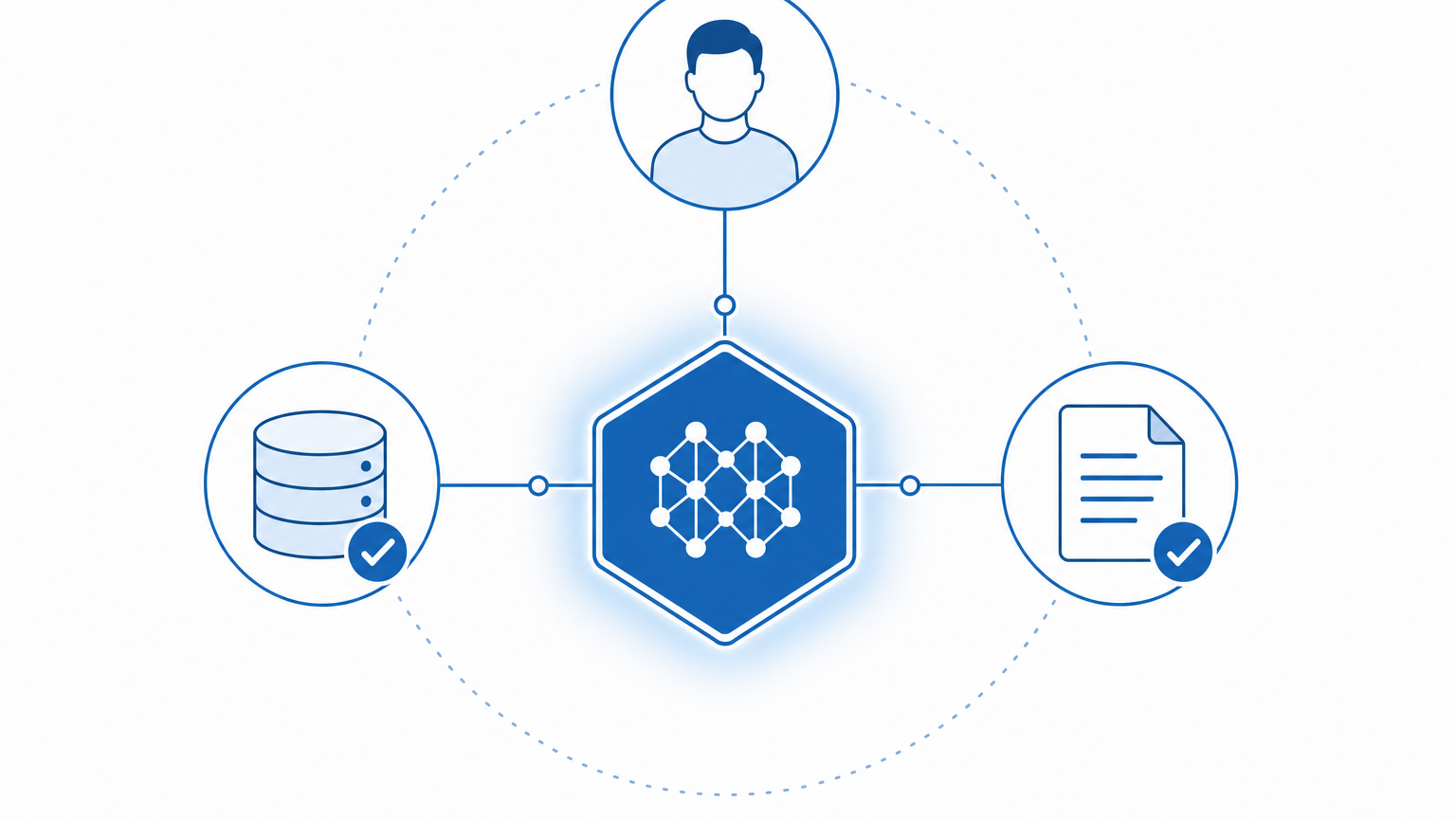
The remedy: oversight by design. Every action the agent takes is logged and auditable. Its autonomy is raised step by step, from simple observation, where it reports what it sees, up to audited autonomous action, with a full trail. And it can be suspended within minutes.
The deciding factor: start small, on what you already have
Beyond the three traps, one decision weighs more than all the others: where to start. The temptation is to buy a large platform and rebuild everything. That is rarely the right choice. Start by connecting an agent to the tools you already use (your ERP, your CRM, your email) on a repetitive process where the value can be measured within the first weeks. Your tools stay exactly where they are. (How agentic AI connects to your existing tools.)
A narrow initial case, measurable within a few weeks, is better than three projects running at once. The figures from that first agent decide whether a second one follows.
What running our own agents taught us
At Djtal, the operational AI specialist for Swiss companies, we are our own first customer. We run a team of nine AI agents on our own processes: communications, sales intelligence, administration, finance, knowledge management. Each is named, answers to a human supervisor, works within a written scope and has every action traced: the three remedies above. (How we design and run them.)
What we learned matches the three traps exactly: an agent without supervision drifts, an agent on bad data amplifies the error, and an opaque agent ends up worrying people.
Three questions to ask any supplier
Before entrusting an agentic AI project to anyone, ask these three questions. Their answers show how the project will be run.
- Who watches the agent once it is in production, and how?
- What data does it rely on? Who approves its sensitive actions?
- Can I see what it is doing and suspend it whenever I want?
If all three answers are clear, you are dealing with a methodical approach. If not, you know what you are taking on.
For the full picture, including the documented causes of failure and the conditions for success, see why AI projects fail.
Ask us these three questions as well. Book a call and we will answer them for your first use case.
A topic worth exploring for your business?
Let's spend 30 minutes on your context and find where AI can help your business.
Speak to one of our experts